Long Story Short…
You do not automatically need a water softener or filtration system in The Villages.
- Filters help with smell, taste, chlorine, sediment, and rust
- Softeners help with scale, spots, soap performance, and appliance protection
- Rust ≠ hard water — rust is usually iron or sediment
The takeaway: If you’re happy with your water, do nothing. If something bothers you, test first — then fix only that problem.
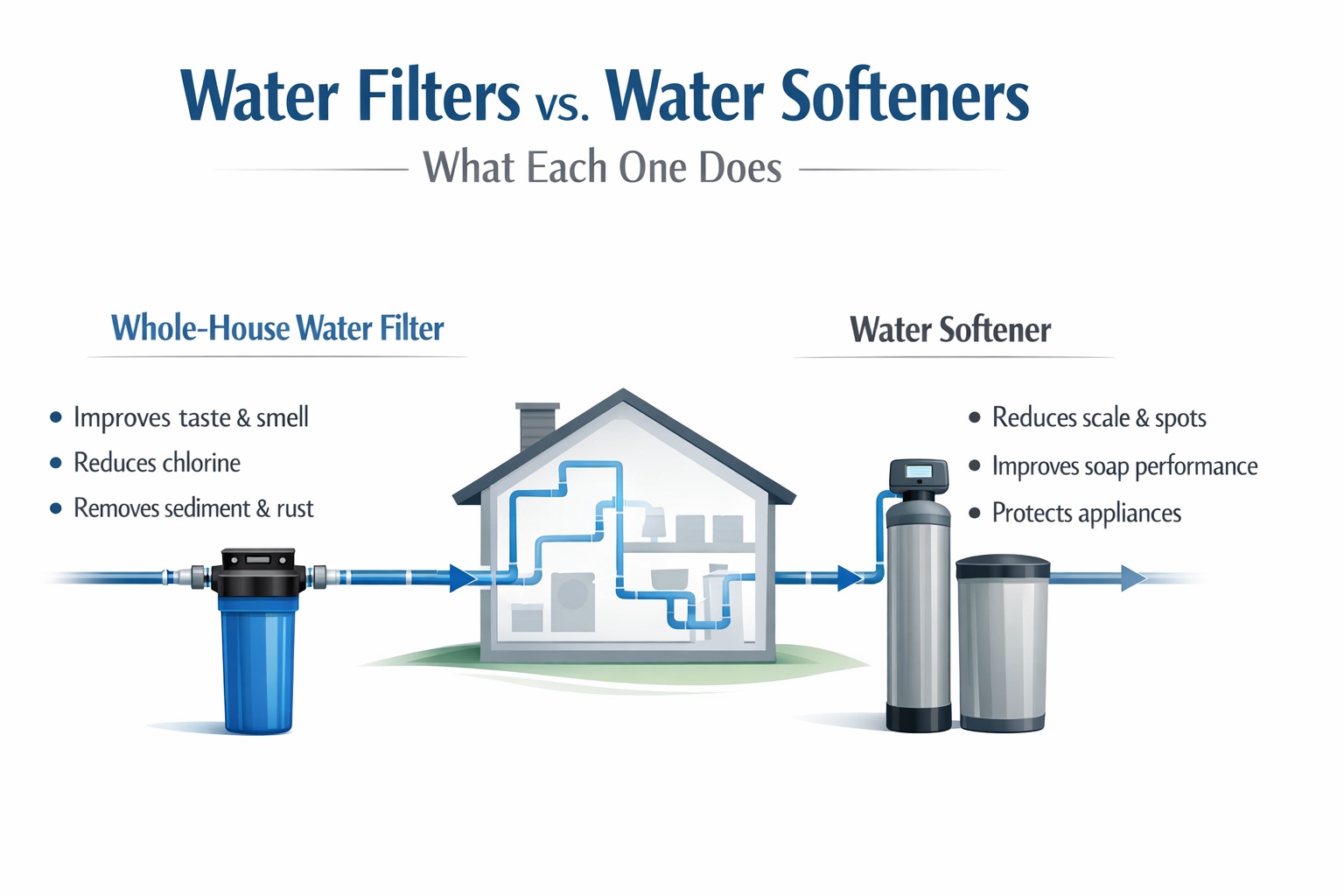
Water filters and water softeners solve different problems.
Water Softeners and Filters in The Villages: A No-BS Guide
What’s Actually in the Water
Water in The Villages is safe and regulated, but its characteristics can vary by location. Most homes receive treated municipal water that may contain disinfectants (chlorine or chloramine), naturally occurring minerals from limestone, and occasional sediment.
That variation explains why one homeowner may notice buildup or dryness while a neighbor down the street has no issues at all.
Here’s the key point: differences in experience do not mean someone is wrong — they usually mean the water is different.
Filters vs. Softeners — They Solve Different Problems
Water filters and water softeners are often discussed together, but they do very different things.
Whole-House Water Filters
Filters are designed to improve water quality.
- Reduce chlorine or chloramine smell
- Improve taste
- Remove sediment
- Help with iron (rust) particles
- Address sulfur or “pool-like” odors
What filters do not do is remove water hardness. You may still see mineral spots or scale even with filtration.
Water Softeners
Softeners are designed to reduce hardness by removing calcium and magnesium.
- Reduce scale on fixtures and glass
- Protect appliances and plumbing over time
- Improve soap lathering and rinsing
- Often result in softer-feeling skin, hair, and laundry
Some people dislike the feel or taste of softened water. Others love it. This is preference — not a defect.
Rust Is Not the Same Thing as Hard Water
Rust complaints are one of the most common sources of confusion.
Rust is usually caused by iron or sediment, not by water hardness.
Common signs include discoloration in toilet bowls, residue under toilet rims, staining in sinks, or buildup in low-flow areas.
In most cases, rust issues are best addressed with:
- A whole-house sediment filter
- Iron-rated filtration if iron levels are higher
A standard water softener alone does not reliably fix rust unless iron levels are very low.
Why Experiences Differ — Even Between Neighbors
It’s common for neighbors to report completely different water experiences. This can be due to:
- Differences in water supply zones
- Plumbing age or materials
- Flow patterns and usage
- Individual sensitivity to taste, smell, or feel
This is why blanket advice — either “you absolutely need a system” or “you never need one” — is rarely helpful.
A Simple, Practical Decision Framework
If you’re trying to decide what makes sense for your home, start here:
Do Nothing
If your water tastes fine, your fixtures are clean, and your skin and hair feel normal, there is no reason to add anything.
Filter Only
If smell, taste, sediment, or rust bother you, a whole-house filter often solves the problem without changing how the water feels.
Softener Only
If mineral buildup, spots, or soap performance are the issue — and you like softened water — a softener may be worthwhile.
Filter + Softener
If you want both cleaner-smelling water and reduced hardness, a combined approach can make sense.
The key is not doing everything — it’s doing only what actually addresses your concern.
Want More Calm, Fact-Based Guides Like This?
We publish practical, no-hype guides about life in The Villages — from development updates and local issues to the everyday topics people debate most.
- Subscribe to our free email updates to get new guides and local insights when they’re published
- Become a site member to comment, share your experience, and join the conversation
We don’t sell products, push vendors, or charge for access — just useful information and real discussions.
Frequently Asked Questions
Do I really need a water softener in The Villages?
No. Many residents never install a water softener and are perfectly satisfied with their water. A softener is a preference-based upgrade, not a requirement.
Why do some people say the water is hard and others say it’s fine?
Water characteristics can vary by location, plumbing, and usage patterns. Sensitivity to taste, smell, and how water feels on skin and hair also differs from person to person.
What’s the difference between a water filter and a water softener?
A filter improves water quality by reducing chlorine, odor, sediment, and sometimes iron. A softener reduces hardness by removing calcium and magnesium, which helps with scale and soap performance. They solve different problems.
Does a whole-house filter remove hard water?
No. Standard filtration does not remove water hardness. You may still see mineral spots or scale even with a filter installed.
Why does softened water feel slippery or hard to rinse?
Without minerals in the water, soap rinses differently and doesn’t leave residue behind. Some people interpret this as “slippery,” while others find it cleaner. It’s a personal preference.
What causes rust or discoloration in toilets and sinks?
Rust is usually caused by iron or sediment in the water, not by hardness. Toilets and low-flow areas tend to show it first.
Will a water softener fix rust problems?
Not usually. Rust is better addressed with sediment or iron-rated filtration. A softener alone is not designed to remove iron unless levels are very low.
Should I test my water before installing anything?
Yes. Testing helps identify whether you’re dealing with hardness, chlorine, iron, or sediment — and prevents unnecessary purchases.
Is softened water safe to drink?
Yes. However, some people dislike the taste. Many households choose to drink filtered refrigerator water regardless of whether they have a softener.
Is water treatment here a necessity or a luxury?
For most residents, it’s a quality-of-life choice. If your water doesn’t bother you, there’s no reason to change anything.


Leave a Reply
You must be logged in to post a comment.