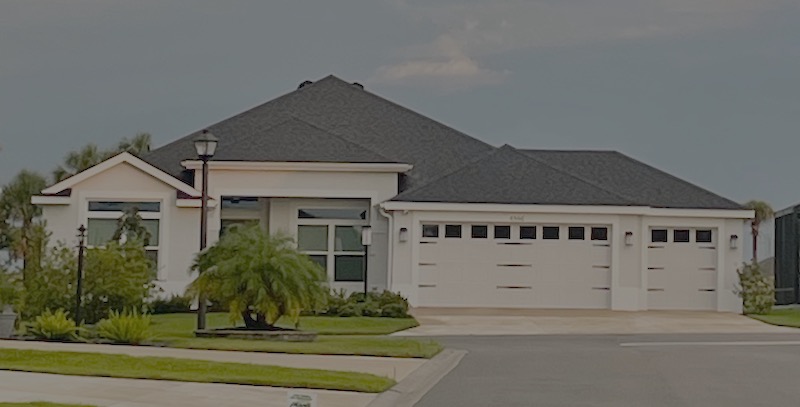
Planning to rent in The Villages this winter?
We checked the current rental market for January through March 2027 to see what’s still available, what current listings are asking, and how early winter properties are being booked.
See our Winter 2026–27 rental market update →A rental in The Villages can look pretty straightforward when you’re browsing listings. Find a house you like, choose your dates, see whether it comes with a golf cart, and make the reservation.
There’s a little more to it than that.
Prices change considerably depending on the time of year. What’s included in the rent varies from one property to another. And some of the things that tend to confuse first-time renters — Guest IDs, Resident IDs, amenity fees, golf carts and minimum stays — don’t always work the way you might assume.
Short-term rentals are a good example. There is no documented Villages-wide minimum rental period that applies to every home. Whether a particular property can be rented nightly, weekly or monthly depends on that property’s recorded restrictions, its jurisdiction, and any applicable state or local requirements.
None of this makes renting here especially difficult. It just means it’s worth asking a few questions before sending a deposit.
Prefer to watch? I cover the key points in this video: Renting in The Villages Florida (2026): 7 Things You Need to Know.
What does it cost to rent in The Villages?
There isn’t one official average rental price for The Villages, and an average wouldn’t tell you the whole story anyway.
Rental-market sources reviewed in August 2026 put the market in a fairly wide range. Zillow, for example, showed an average of around $2,500 per month across property types. Furnished seasonal rentals can run considerably higher, particularly during winter.
The bigger factor is season.
January through March is generally the most expensive period. That’s the heart of snowbird season, when demand is high and many of the more desirable seasonal rentals are already spoken for.
Summer is a different market. There’s typically more inventory available and prices tend to be lower. Spring and fall fall somewhere in between.
That’s why comparing the price of a February rental with one available in August can give you a pretty distorted idea of what a home “normally” rents for.
As a rough snapshot, furnished seasonal rentals reviewed for this article ranged from about $1,800 to $3,000 per month during shoulder periods. January through March examples were more commonly around $2,800 to $4,500 or more, depending on the home, location and amenities.
Those aren’t official Villages rental rates, and they shouldn’t be treated as a prediction of what you’ll find when you search. They’re simply examples of what the market looked like when this article was researched.
More important than the advertised monthly rate is what that number actually includes.
Before comparing two properties, find out whether the rent covers utilities, internet, furnishings, amenity access, a golf cart, cleaning fees and any other required charges.
A $2,400 rental with most of those expenses included may turn out to be cheaper than a $2,100 rental once everything is added up.
Renting in The Villages, Florida changes with the season
If your dates are flexible, timing can make a meaningful difference.
January through March is generally peak season and the most expensive time to rent. Demand begins easing in April and May. June through September tends to be the lower-cost period, with more inventory available, and demand starts building again from October into December.
There’s another reason this matters if you’re considering a move here.
A winter rental doesn’t necessarily give you a representative picture of what either the rental market or everyday life looks like year-round. The Villages in February and The Villages in August can feel quite different.
If you specifically want a winter rental, it also pays to start looking early. Rental sources report that popular seasonal properties can be reserved many months ahead.
How long can you rent a home?
This is one of the areas where older or secondhand information can cause unnecessary confusion.
There is no verified Villages-wide rule requiring every rental to be 30 days or longer.
District materials instead point homeowners toward the recorded Declaration of Restrictions that applies to their particular property. Florida law also limits how local governments can regulate the duration and frequency of vacation rentals.
But that doesn’t mean every home in The Villages can legally be rented for a night or a weekend.
Restrictions can come from the property’s own recorded declaration or other governing documents. Depending on the address, county or municipality, there may also be local requirements. Short-term vacation rentals can trigger Florida licensing and tax requirements as well.
So if someone tells you, “The Villages doesn’t allow short-term rentals,” that’s too broad.
On the other hand, finding a house listed on Airbnb isn’t proof that the particular property complies with every applicable rule.
If you’re considering a nightly or weekly rental, ask the owner or manager what allows that particular property to be rented for the advertised period and whether any applicable licensing or local requirements have been addressed.
That gets you much closer to the information that actually matters.
What about Airbnb and Vrbo?
Short-term rentals do exist in The Villages, including properties advertised through Airbnb and Vrbo.
The platform itself, however, doesn’t tell you whether a particular property complies with its deed restrictions, local requirements, licensing obligations or taxes.
Florida’s vacation-rental licensing rules can also apply to properties repeatedly offered for short stays. Research for this article found that a whole-unit rental offered more than three times a year for stays shorter than 30 days — or regularly advertised that way — falls within Florida’s vacation-rental licensing framework.
From a renter’s perspective, the practical point is pretty simple: don’t assume the platform has checked everything for you.
Ask before you pay.
How Guest IDs work for renters
This is probably one of the easiest things to misunderstand.
A Guest ID issued by The Villages District is generally valid for 30 days and can be renewed for additional 30-day periods.
That 30-day period applies to the credential. It does not mean your rental itself has to last 30 days.
The District also offers a Non-Owner Resident ID for people living in homes they don’t own, but eligibility involves more than simply renting for a certain length of time. The homeowner must certify that the person is a permanent resident, and additional documentation is required.
In other words, staying longer than 30 days doesn’t automatically turn a renter into a Resident ID holder.
If amenity access matters to you — and for most renters it probably does — ask the owner or property manager which ID arrangement will apply and who is responsible for obtaining it.
It’s much easier to sort that out before you arrive than after you’ve unpacked.
How amenity access works with a rental
The amenity fee you may hear Villages homeowners talk about is associated with the property. It is a contractual charge billed under the homeowner’s deed covenant, rather than a standard monthly fee charged directly to every renter.
For renters, the more useful question is how amenity access will work during the stay.
That usually comes back to the ID arrangement for the rental. Before booking, ask the owner or property manager which ID applies to your stay, what access it provides, and what needs to be done before you arrive.
It is also worth asking whether there are any costs associated with obtaining or transferring the appropriate ID or amenity privileges.
The important distinction is that the property’s monthly amenity fee and a renter’s amenity access are not the same thing. As a renter, you generally do not need to know what the homeowner pays each month. You need to know what access you will have during your stay and how that access will be arranged.
Find out exactly what comes with the golf cart
For a lot of renters, the golf cart is almost as important as the house.
Some rentals include one. Some don’t.
If you have to arrange your own, prices vary quite a bit by provider and cart type. Providers reviewed for this article showed monthly rates of roughly $450 to $700 for standard carts, while shorter rentals ran approximately $20 to $55 per day.
Again, those are examples from individual providers, not an official market average.
If a cart comes with the house, don’t stop at “golf cart included.” Find out what kind of cart it is, who can drive it, whether insurance is included, what happens if it breaks down, and whether there are any additional delivery or other charges.
Registration is another area where location matters. There is currently no District-wide golf-cart registration requirement. Sumter County and Wildwood have voluntary registration programs, while broader registration has been under discussion.
The main point is to check the details for the cart you’ll actually be using rather than assuming all carts and locations are treated the same way.
If the listing says “pool,” ask what that means
A pool can make a noticeable difference in both the price and appeal of a rental, but listings don’t always use the term in the same way.
Some homes have their own private pool. Others advertise pool access because eligible renters can use community recreation-center pools.
Those are obviously two very different amenities.
If the home has a private pool, ask whether it’s heated and whether heating is included in the rent. That matters especially during the cooler months. A private pool may look like a major selling point in a January listing, but it’s less useful if heating costs extra and you weren’t expecting the charge.
Also ask about cleaning or maintenance fees and whether there are any restrictions associated with pool use.
When comparing rentals, treat the pool as part of the overall package. A somewhat more expensive home with a private heated pool and golf cart included may be better value than a cheaper property where both cost extra.
A simple question usually clears this up:
“Is the pool private, is it heated, and are all pool-related costs included in the rental price?”
Why two similar homes can have very different prices
Rental prices can vary considerably even when the homes themselves look fairly similar.
Location is a big part of it. A house convenient to a town square, recreation center, golf course, restaurants or shopping may command more than a comparable home farther away.
Size matters, of course, but so do features such as a private pool, included golf cart, updated furnishings, a larger lanai, an attractive view or additional outdoor space.
Then there are the less visible differences.
One home may include utilities, internet, pool heating and a golf cart. Another may advertise a lower rent and charge separately for several of those things.
And season can outweigh almost everything else. The same house may have a substantially different price in January than it does in July.
So I wouldn’t start with, “What’s the cheapest house I can find?”
I’d start with, “What will this house actually cost me for the stay I want?”
That’s a much more useful comparison.
The Lifestyle Preview is a good place to start
If you’ve never been to The Villages and you’re seriously considering a move here, the Lifestyle Preview is probably the best place to start. The Villages offers the program specifically for prospective buyers, giving you a few days to experience the community without committing to a longer rental.
As of October 13, 2026, the official program listed stays of four to seven days at $129 to $229 per day, based on two guests per home and depending on season and availability. The stay includes a furnished two-bedroom, two-bath home and a golf cart, along with access to community amenities and activities.
Depending on the current offer and whether it’s your first visit, there may be other things included as well, such as bicycles, rounds of golf, movie tickets or other activities. The package can change, so check what’s included when you make your reservation rather than assuming every Lifestyle Preview comes with the same extras.
If you enjoy the Preview and are still thinking seriously about moving here, a longer private rental can be a useful next step. A few days will introduce you to The Villages; a few weeks or a month can give you a much better sense of what everyday life here is actually like.
Pricing also varies by season and availability.
This isn’t part of the regular rental market. It’s a developer-operated preview program, so it’s better thought of as an alternative to a short private rental rather than another rental listing.
It also isn’t an apples-to-apples price comparison. A furnished home, golf cart, amenity access, and any included activities all add value beyond the nightly rate.
For someone seriously considering a move to The Villages, the Lifestyle Preview can be a useful first look. A longer private rental will usually give you a better sense of everyday life, but the preview program can help you get oriented before deciding whether you want to spend more time here.
Where you rent matters more than you might think
The cheapest available home isn’t necessarily the best home for your trip.
Before booking, think about where you expect to spend your time.
If you want to be near Brownwood Paddock Square, Lake Sumter Landing or Spanish Springs, look at the actual address rather than relying on phrases like “near Brownwood” in a listing.
The same goes for golf, pickleball, restaurants, shopping or visiting friends who already live here.
The Villages covers a large area across three counties and includes both incorporated and unincorporated areas. That can matter for local rules and services, too, so a mailing address alone doesn’t always tell you which jurisdiction applies to a property.
For a longer stay, pull up the address on a map and look at the routes you’re likely to use.
“A short golf-cart ride” can mean different things to different people.
If you’re still deciding which part of The Villages fits you, our guide to the best places to live in The Villages compares the main areas. And if you’re looking at the newer southern villages, read what living near Eastport is really like before you book.
What to ask before you send a deposit
You don’t need to interrogate the owner, but you should have the important details in writing.
Start with the exact street address and the rental period. For a short-term stay, ask what property restriction or governing rule allows the advertised rental period.
Then get a clear breakdown of the price. Does it include utilities? Internet? Furnishings? Amenity access? A golf cart? Pool heating? Cleaning? Are there additional required fees?
Ask how amenity access will work and which ID you’ll be eligible to receive. Remember that renting for more than 30 days doesn’t automatically qualify you for a Resident ID.
You should also know who owns or manages the property and what the cancellation and deposit terms are.
Taxes are worth checking too. Depending on the property and jurisdiction, shorter stays can be subject to Florida sales tax and applicable county tourist-development taxes. Lake and Marion counties currently impose 4% county tourist-development taxes on qualifying accommodations. Sumter County currently has a 0% county tourist-development tax, although a 2% proposal is scheduled for a November 2026 referendum.
Finally, ask about pets, occupancy limits and any other house-specific restrictions.
None of these are unusual questions. A legitimate owner or manager should be able to explain the terms of the rental clearly.
Take a few minutes to verify who you’re dealing with
Rental scams aren’t unique to The Villages, but seasonal rentals involving substantial deposits can make attractive targets.
One warning sign is pressure to send money quickly before you’ve had a reasonable chance to verify the property or the person offering it.
Before sending a substantial deposit, confirm the exact address and check the property through the appropriate county property-record system. Make sure the person you’re dealing with is the owner or an authorized property manager.
It’s also reasonable to speak with the person by phone or video instead of handling the entire transaction through text or email.
Get the rental terms in writing and be cautious about unusual payment requests, especially if you’re being told that money has to be sent immediately to “hold” the property.
And don’t assume a listing has been independently verified simply because it appears on Airbnb, Facebook, Vrbo or another familiar platform.
If someone won’t answer reasonable questions about the house, ownership, rental terms or payment arrangements, that tells you something too.
Renting before buying can tell you things a home tour can’t
If you’re thinking about moving to The Villages, renting first can be useful for a reason that has very little to do with the rental itself.
It gives you time.
A home tour can show you a house. A few days of sightseeing can show you the fun parts of the community. Neither necessarily tells you what an ordinary week here feels like.
A rental can.
Go grocery shopping. Take the golf cart out at night. Try the restaurants you think you’d actually use — our Villages dining guide is organized by town square to make that easier. Visit different recreation centers. See how long it really takes to get from the neighborhood to the places that matter to you.
If possible, spend time here during the season when you expect to live here.
The Lifestyle Preview Plan can give prospective buyers an introduction to The Villages. A longer private rental can give you a less structured look at daily life.
Neither approach is automatically better. They answer slightly different questions.
If buying is your eventual goal, the useful question isn’t simply whether you had a good week here.
It’s whether ordinary life here works for you.
Rental checklist before you book
By the time you’re ready to reserve a property, you should have a pretty clear picture of what you’re getting and what it will actually cost.
Before sending a deposit, run through this checklist:
- Confirm the exact street address.
- Confirm the minimum or allowed rental period for the property.
- Verify who owns or manages the home.
- Get the total rental price in writing.
- Confirm which utilities are included.
- Confirm whether internet is included.
- Ask how amenity access will work.
- Confirm which ID arrangement applies to your stay.
- Check whether a golf cart is included.
- Ask about golf-cart insurance and driver requirements.
- If there’s a private pool, confirm whether it’s heated and whether heating is included.
- Confirm cleaning fees and any other required charges.
- Ask which taxes apply to the rental.
- Review the deposit and cancellation policy.
- Confirm pet and occupancy rules.
- Get the important rental terms in writing.
That may look like a long list, but most of it can be cleared up in one conversation with the owner or property manager.
Considering the amount of money involved in a seasonal rental, it’s worth doing before anything changes hands.
The bottom line
Renting in The Villages isn’t especially complicated once you stop thinking of “The Villages” as having one rental rule that applies everywhere.
Prices change by season. What’s included varies by house. Guest IDs and Resident IDs are different things. Golf carts and pools need a little more clarification than a listing headline may provide. And short-term rentals exist, but whether a particular property can be rented for a particular length of time depends on the property and the rules that apply to it.
The best approach is to rent a specific property, not simply a home “in The Villages.”
Get the address. Understand the rental terms. Check what’s included. Know which jurisdiction applies. Verify who you’re dealing with. Put the important details in writing.
And if you’re renting because you might eventually buy here, use the time to see what everyday life actually feels like.
That may end up being the most valuable part of the rental.
Rental rules, taxes, pricing and District policies can change. This article reflects information researched in August 2026. For a specific property, verify the current rules and terms before booking.